
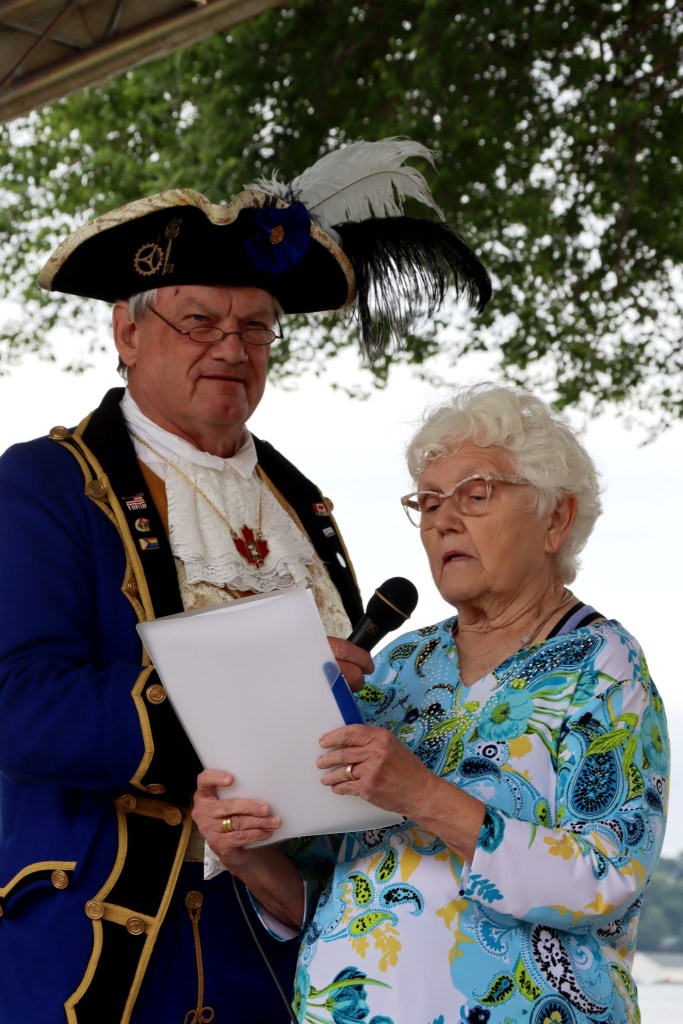
Town Crier Brian Mabee and Poet Laureate Gretchen Huntley were among the special speakers at the performance of “Humankind” held in Joel Stone Park on June 22. Lorraine Payette/for Postmedia Network 
Reverend Takouhi Demirdjian-Petro was among the special speakers at the performance of “Humankind” held in Joel Stone Park on June 22. Lorraine Payette/for Postmedia Network 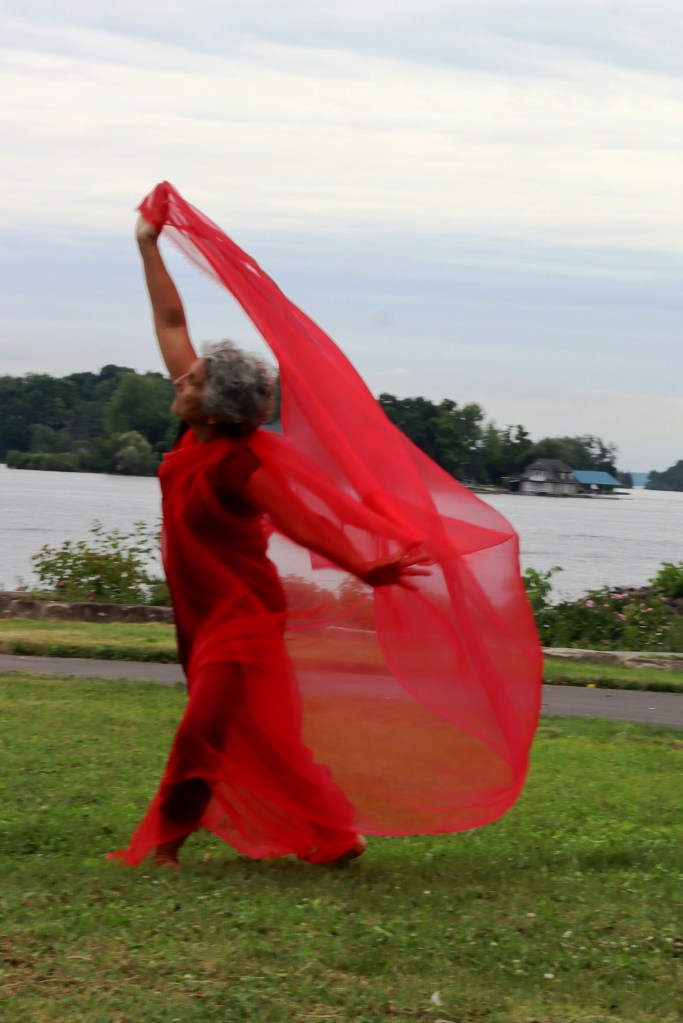
Event organizer Debbie Donaldson led the performance of “Humankind” held in Joel Stone Park on June 22. Lorraine Payette/for Postmedia Network 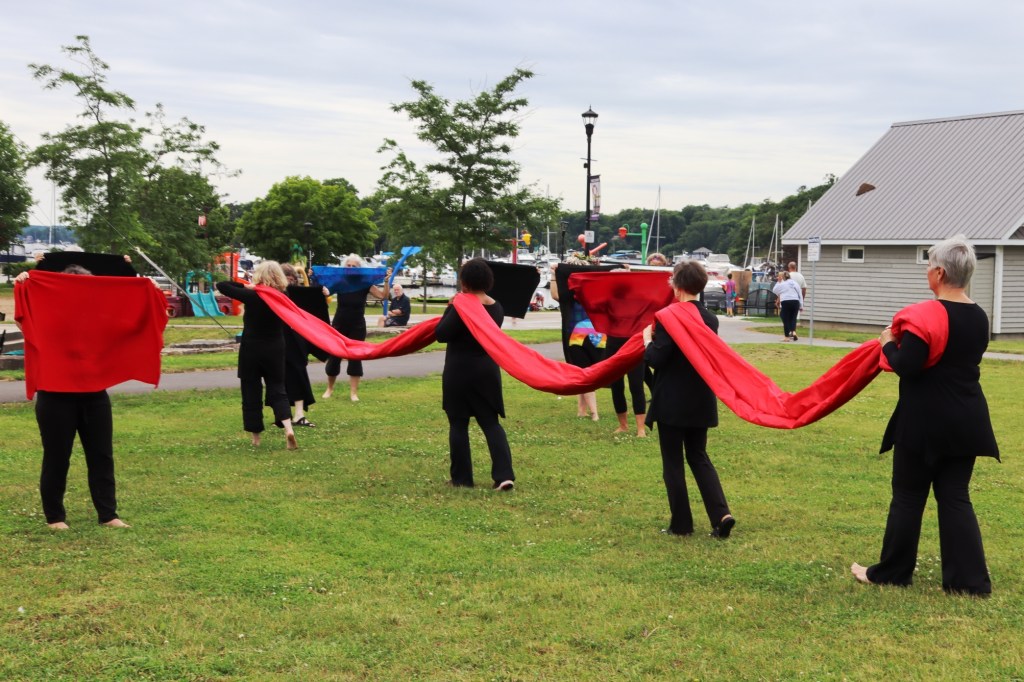
The gatekeepers enter with the 30-foot red silk cloth that represents thee chosen community at the performance of “Humankind” held in Joel Stone Park on June 22. Lorraine Payette/for Postmedia Network 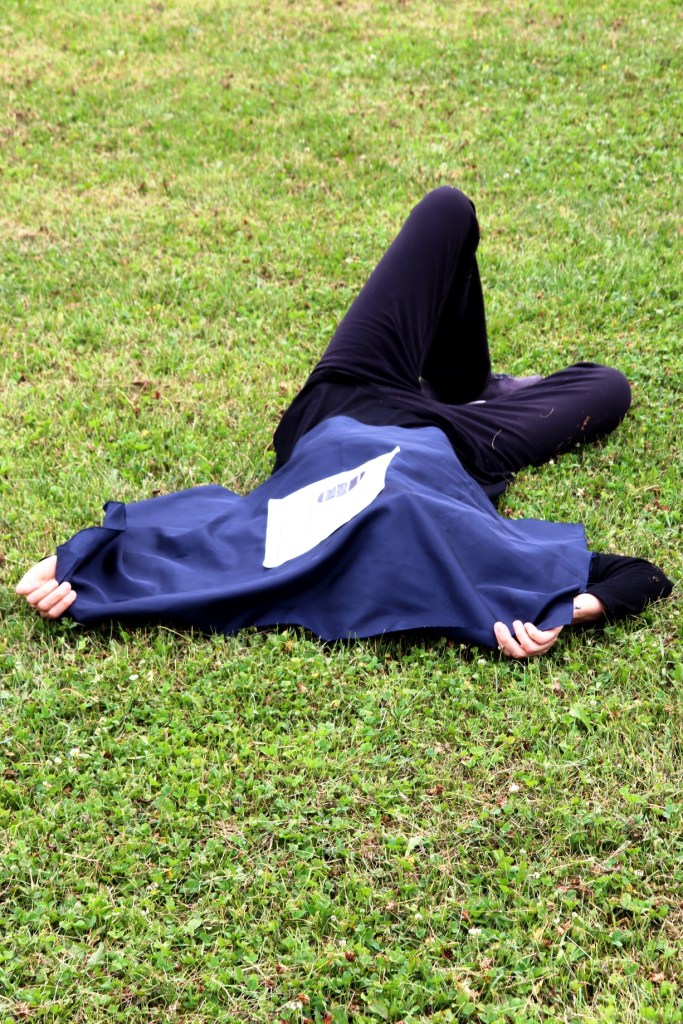
Some of the displaced persons fall into despair, wither and die during the performance of “Humankind” held in Joel Stone Park on June 22. Lorraine Payette/for Postmedia Network 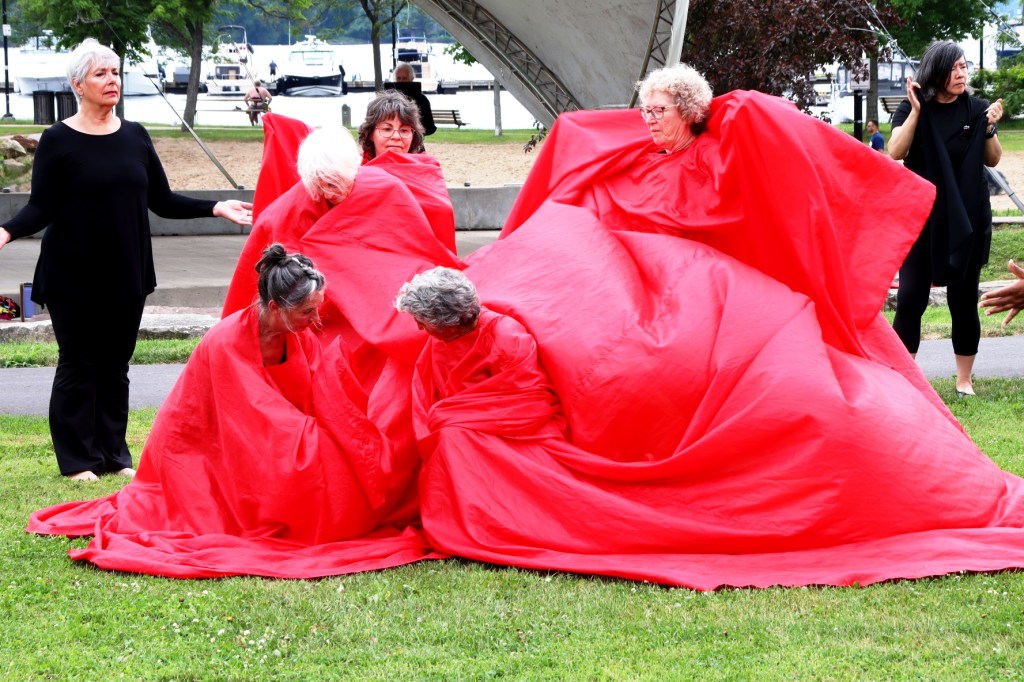
Members of the chosen community dance their love and appreciation for each other during the performance of “Humankind” held in Joel Stone Park on June 22. Lorraine Payette/for Postmedia Network 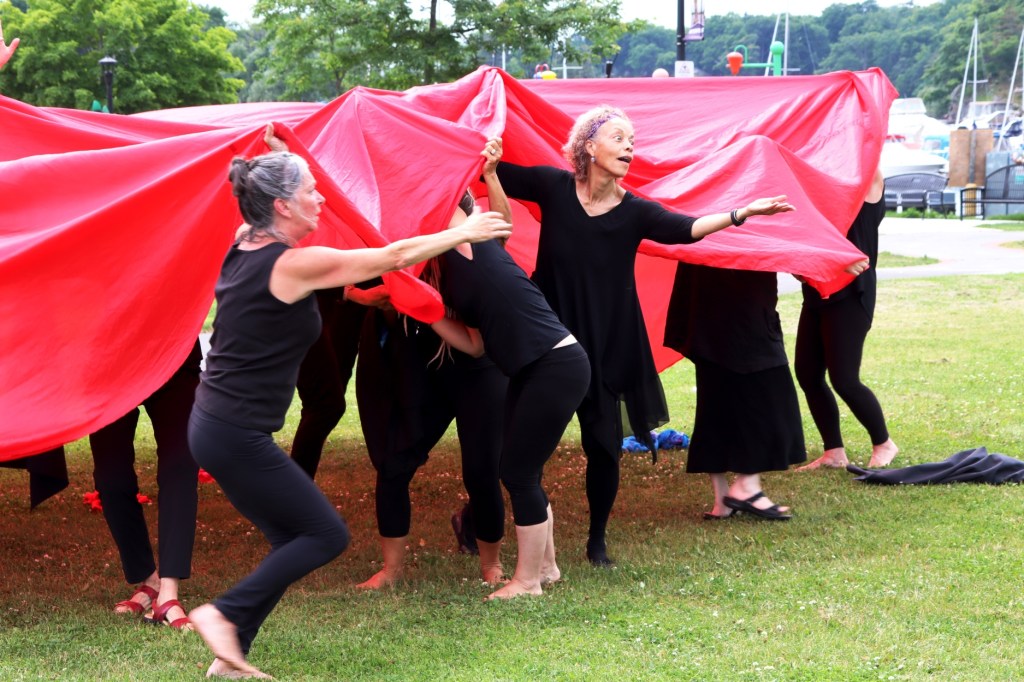
The community begins to admit the displaced into its ranks at the performance of “Humankind” held in Joel Stone Park on June 22. Lorraine Payette/for Postmedia Network 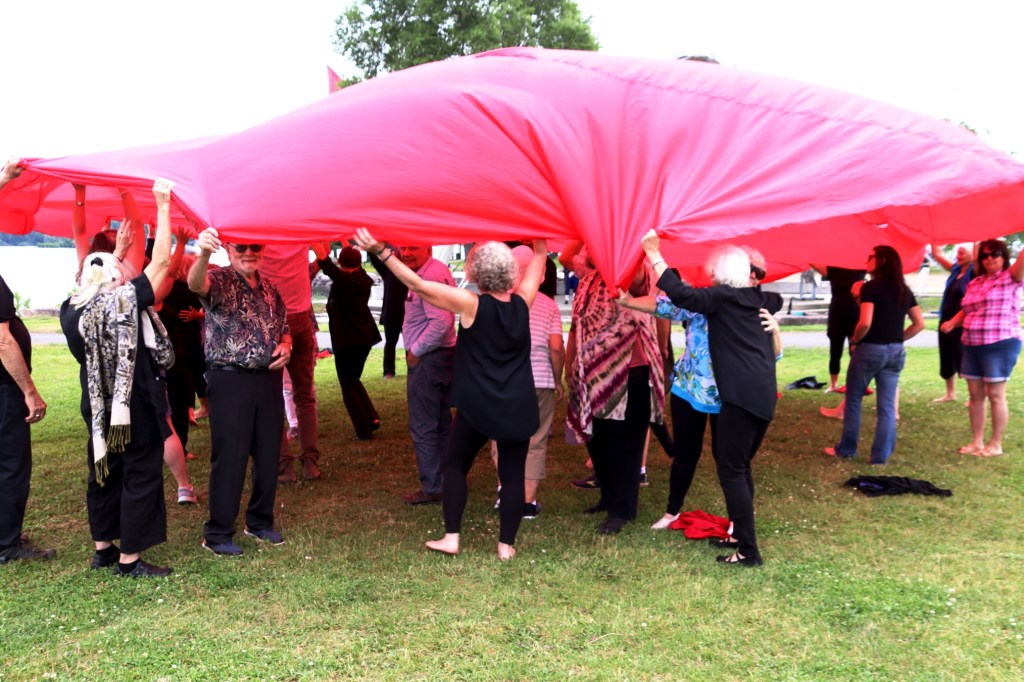
Eventually everyone is welcome to join the chosen com munity during the performance of “Humankind” held in Joel Stone Park on June 22. Lorraine Payette/for Postmedia Network 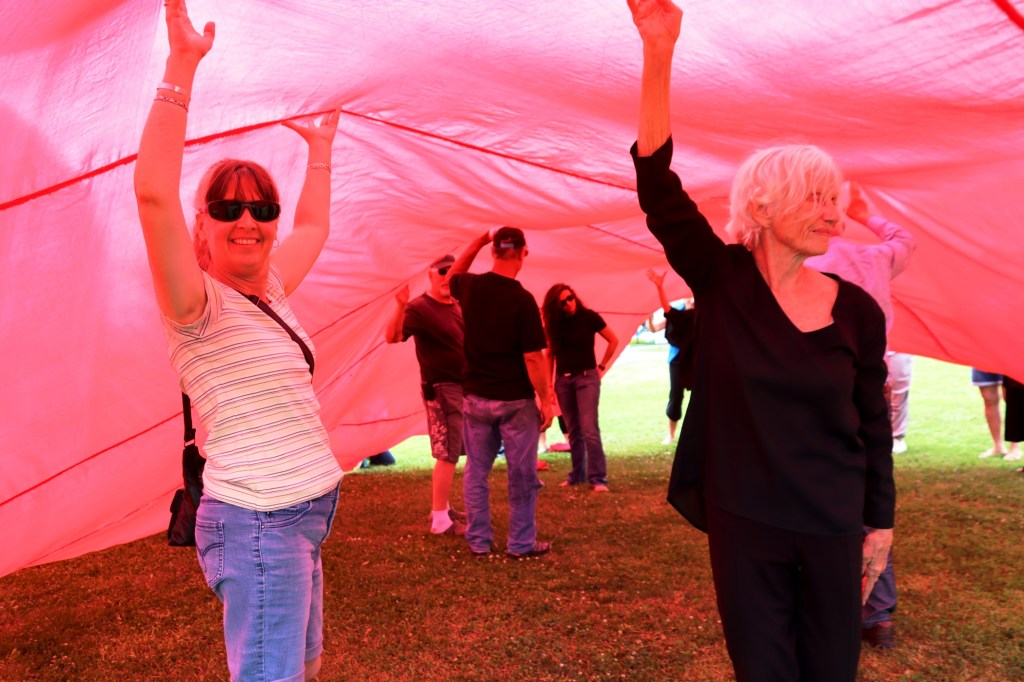
A rosy glow of safety surrounds everyone when they become part of the chosen community at the performance of “Humankind” held in Joel Stone Park on June 22. Lorraine Payette/for Postmedia Network 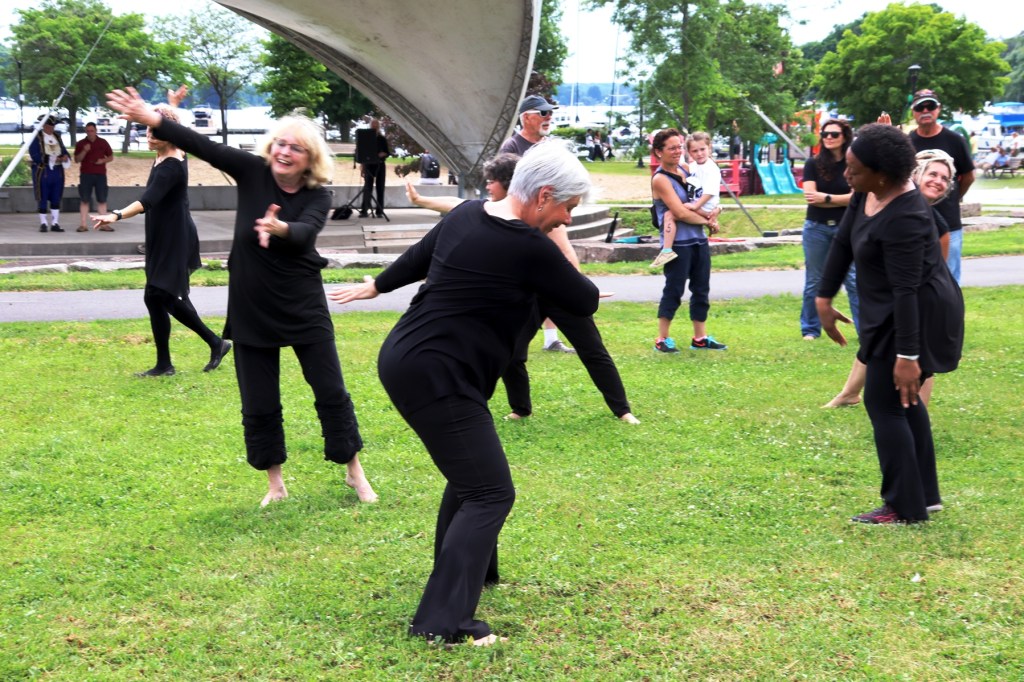
With the community open to all, everyone rejoices at the performance of “Humankind” held in Joel Stone Park on June 22. Lorraine Payette/for Postmedia Network
(Gananoque, ON June 23, 2024) Humankind came to Joel Stone Park in Gananoque on June 22, reaching out to society to embrace all and make them one in the planetary community.
“Through music and dance this experience shows the struggles humankind is having to find its place in thee world,” said Town Crier Brian Mabee. “‘Humankind’ had its birth when the Trinity Movement Choir performed at the 2018 Parliament of the World’s Religions in Toronto. In 2020, the pandemic intervened, and the movement choir expanded internationally, performing full seasons of new works online with Sacred Dance Guild members from Australia, New Zealand and Canada to Hawaii and across the contiguous United States joining the New York region dancers.”
About 40 participants performed the dance in the park. The music for “Humankind” was created by Debbie Danbrook, first woman master of the shakuhachi, a Japanese longitudinal, end-blown flute that is made of bamboo. Although sung, there are no words, making it more understandable to all language groups.
Mayor John Beddows spoke at the event. On June 18, he had signed a proclamation declaring:
“WHEREAS Refugee Week was first proposed by the founding president of the Refugee Council of Australia (RCOA), Major General Paul Cullen, at a meeting of RCOA members in Sydney in February 1983;
AND WHEREAS Refugee Week has grown into a week in which hundreds of organizations and communities celebrate the week in the way they believe is most meaningful;
AND WHEREAS Events have included celebrations of music and the arts, public talks and seminars on refugee issues, sporting events, rallies and much more;
AND WHEREAS Refugee Week is an important opportunity for us all to experience and celebrate the rich cultures of refugee communities.
NOW THEREFORE, I, John Beddows, Mayor, proclaim the week of June 17 to 23, 2024, be recognized as “Refugee Week” in the Town of Gananoque.”
Poet Laureate for Gananoque, Gretchen Huntley, presented a special poem written for the occasion. Entitled “Homeland”, it looks at life through the eyes of a refugee.
“…I arrived excited
Expecting to be welcomed with open arms
In my mind it would be wonderful
This country with all of its charms
But this country did not welcome me
They felt I didn’t belong
And now I was in limbo
Not understanding what I did wrong
I could not go back
There was no home left there for me
I must try to find a way to be accepted…”
The performance takes 45 minutes and requires a large space in order to be fully effective. A blessing is asked for all participants, and then they begin. The connected society (represented by five dancers enclosed in a 30-foot red silk cloth) is protected by its gatekeepers, allowing no one in. Displaced people arrive at the gates but are firmly turned away. As some watch in hunger and moan by the wayside, others fall to the ground to wither and die. Those in the accepted community show their love and depth of caring for each other but remain aloof to those on the outside. Eventually they begin to see past the gatekeepers, to realize that they are not the only ones deserving of all that lies in the safety and security of their community. They gradually open the doors and let everyone in – other dancers and audience alike – becoming one with Humankind. With the final realization and union of all, the symbolic red cloth and markings of societal distinction are stripped away and removed, and everyone dances in joy and triumph at the chance to share a world in peace and happiness.
“Hope, Waiting and Longing are the three words which are the main theme of this presentation,” said Debbie Donaldson, dancer and organizer. “It is the story of the displaced persons in the world – those of yesterday, today and those of tomorrow.
“I would like to acknowledge that in addition to the most ‘visible’ displaced persons in refugee camps, countries at war and /or other struggles, there are displaced persons in our own country and even in our communities that may not be as visible as it might seem. People who are displaced because of their views, gender orientation, housing situation, mental or physical challenges are in our midst.”
She emphasized that in “2024 it is estimated at the end of 2022 that there are approximately 71.1 million displaced persons in the world today – of which 40% are children under the age of 18; low and middle income countries host 76% of the world’s refugees and displaced persons; the average time a refugee spends ‘in exile’ is approximately 15-20 years – for those in refugee camps the average in 2019 was 17 years – there are those who have been born and who die in refugee camps; and in Canada the approximate time to process a refugee claim is 24 months.”
Reverend Takouhi Demirdjian-Petro was born and raised in Beirut, Lebanon in an Armenian family. She offered a special prayer for the occasion and shared her personal story and experiences as a former refugee who found peace, hope and community in Canada.
“But it isn’t about the country,” she said. “It isn’t about whether I was lucky or not, or that God reached out to me in my time of need. It’s about the people – all of the people – who make it happen. It’s about Humankind.”
 A Fresh News Start